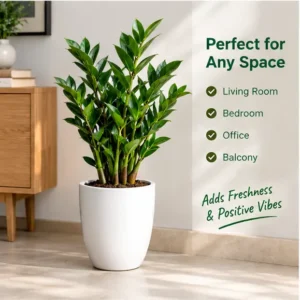
₹600.00Original price was: ₹600.00.₹350.00Current price is: ₹350.00.Add to cart
Not every home has a bright, sunny window. Rooms with north-facing windows, shaded balconies, hallways, bedrooms, offices, and corners away from direct sunlight can still look beautiful with the right plants. Low light plants are varieties that can tolerate lower levels of natural light than many sun-loving plants.
However, low light does not mean no light. Plants still need usable natural or artificial light to photosynthesize and grow. In very dark rooms with no daylight, a suitable grow light may be necessary. Plants also tend to grow more slowly in low light, which means they usually use water more slowly as well.
If you are looking for easy-care plants for a dim room, bedroom, office, living room, or indoor corner, the following plants are among the most practical choices.
Top 10 Low Light Plants
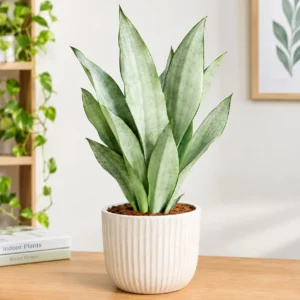
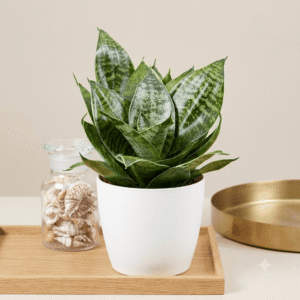
1. Snake Plant
Snake Plant (Dracaena trifasciata) is one of the most popular choices for low-light homes because it tolerates a wide range of indoor light conditions and does not require frequent watering.
Its upright leaves make it especially useful for bedrooms, living rooms, offices, hallways, and narrow corners. Allow the soil to dry well between waterings, particularly when the plant is kept in a dim location.
Best for: Bedroom, living room, office, hallway and low-light corners.
Light: Low to bright indirect light Water: Allow the soil to dry substantially before watering Care level: Very easy
2. ZZ Plant
The ZZ Plant (Zamioculcas zamiifolia) is another excellent choice for people who want an attractive plant that can tolerate low light and irregular watering.
Its thick, glossy leaves and underground rhizomes help it store water. It grows slowly in dim conditions, so it does not need frequent watering. In fact, keeping the soil constantly wet is one of the easiest ways to damage a ZZ Plant.
Best for: Office desks, bedrooms, living rooms, hallways and shaded indoor corners.
Light: Low to bright indirect light Water: Water after the soil has dried appropriately Care level: Very easy
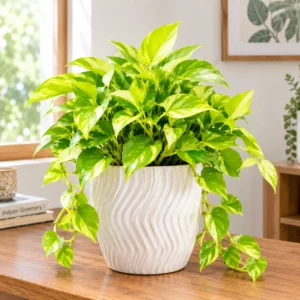
3. Money Plant / Pothos
Money Plant (Epipremnum aureum), commonly called Pothos, is a versatile trailing plant that can adapt to lower-light indoor locations.
It can be grown in soil or, in suitable setups, in water. Its trailing stems make it excellent for shelves, hanging planters, cabinets and indoor corners. In lower light, variegated varieties may gradually show less variegation and become greener.
Best for: Bedroom, living room, shelves, hanging planters and office spaces.
Light: Low to bright indirect light Water: Water when the soil has dried appropriately Care level: Easy
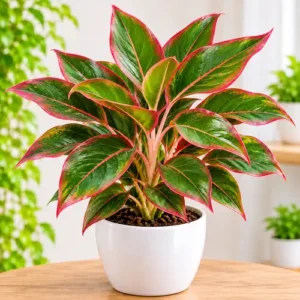
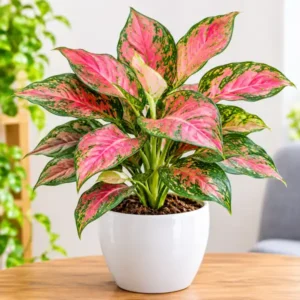
4. Aglaonema
Aglaonema, also known as Chinese Evergreen, is particularly attractive if you want colourful or patterned foliage in a low-light area.
Different varieties have green, silver, pink, red, or variegated leaves. Green-leaved varieties are generally better choices for lower-light locations, while highly variegated varieties may need more light to maintain their colour and patterns.
Best for: Living rooms, bedrooms, offices, tables and indoor corners.
Light: Low to medium indirect light Water: Keep the soil moderately moist but avoid waterlogging Care level: Easy
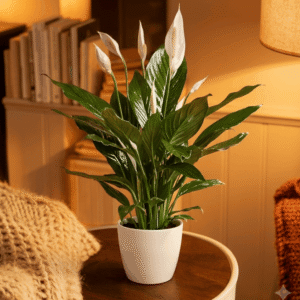
5. Peace Lily
Peace Lily (Spathiphyllum) is a popular indoor plant with attractive green foliage and distinctive white flowers.
It can tolerate lower light, although flowering is generally better when the plant receives sufficient indirect light. Peace Lily can also show visible drooping when it needs water, but it should not be kept constantly waterlogged.
Best for: Living rooms, bedrooms, offices and shaded indoor spaces.
Light: Low to medium indirect light Water: Water when the soil begins to dry, while avoiding soggy soil Care level: Easy to moderate
6. Lucky Bamboo
Lucky Bamboo (Dracaena sanderiana) is a compact option for desks, shelves and indoor corners where direct sunlight is unavailable.
It is commonly grown in water or in a suitable growing medium and prefers filtered or indirect light. Direct, intense sunlight can damage its foliage.
Best for: Office desks, study tables, bedrooms, shelves and decorative corners.
Light: Low to medium indirect light Water: Depends on whether it is grown in water or soil Care level: Easy
7. Heartleaf Philodendron
Heartleaf Philodendron (Philodendron hederaceum) is a trailing foliage plant with attractive heart-shaped leaves.
It works particularly well in hanging baskets, shelves and plant stands. It can tolerate lower light, although growth is usually stronger when it receives adequate indirect light.
Best for: Shelves, hanging baskets, bedrooms, living rooms and offices.
Light: Low to bright indirect light Water: Allow the upper layer of soil to dry before watering Care level: Easy
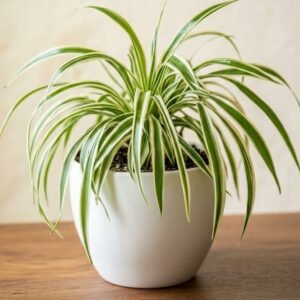
8. Spider Plant
Spider Plant (Chlorophytum comosum) is a popular beginner-friendly indoor plant with long, arching leaves and small plantlets that develop on mature stems.
It can tolerate lower-light conditions, although brighter indirect light can encourage stronger growth. Avoid keeping the roots constantly wet.
Best for: Bedrooms, kitchens, offices, shelves and hanging planters.
Light: Low to bright indirect light Water: Water when the soil begins to dry Care level: Easy
9. Cast Iron Plant
Cast Iron Plant (Aspidistra elatior) is one of the more shade-tolerant foliage plants and is especially useful for areas where many other houseplants struggle.
Its broad green leaves create a simple, elegant appearance. It is a good choice for shaded rooms, hallways and locations away from bright windows.
Best for: Hallways, shaded rooms, offices and darker indoor corners with some usable light.
Light: Low to moderate light Water: Water according to soil dryness and growing conditions Care level: Very easy
10. Dracaena
Dracaena includes several attractive indoor varieties with upright growth and decorative foliage. Many Dracaena varieties tolerate lower-light indoor conditions and can be used as floor plants or decorative office plants.
They are especially useful when you want a taller plant for a room that does not receive strong direct sunlight.
Best for: Living rooms, offices, bedrooms and indoor corners.
Light: Low to bright indirect light, depending on variety Water: Allow the soil to dry appropriately between waterings Care level: Easy
Quick Comparison: Best Low Light Plants
Plant
Best Location
Light Tolerance
Care Level
Snake Plant
Bedroom, office
Very good
Very easy
ZZ Plant
Office, bedroom
Excellent
Very easy
Money Plant
Shelf, hanging planter
Very good
Easy
Aglaonema
Living room, office
Very good
Easy
Peace Lily
Living room, bedroom
Good
Easy–Moderate
Lucky Bamboo
Desk, shelf
Good
Easy
Heartleaf Philodendron
Hanging basket
Good
Easy
Spider Plant
Bedroom, kitchen
Good
Easy
Cast Iron Plant
Shaded room
Excellent
Very easy
Dracaena
Office, living room
Good
Easy
What Does Low Light Mean for Plants?
Low light does not mean that a plant can grow in complete darkness.
A low-light location generally means an area that receives limited natural light, such as a room away from a bright window, a north-facing room, a shaded indoor corner, or an office with indirect daylight.
A simple practical test is to look at the location during the daytime. If there is enough natural light to comfortably see and use the room without turning on artificial lights, some low-light-tolerant plants may be suitable. A completely windowless room may require a grow light.
Can Plants Grow Without Direct Sunlight?
Yes. Many indoor plants do not require direct sunlight.
Low-light plants can grow using indirect or filtered light. In fact, strong direct sunlight through a window can scorch the leaves of some shade-tolerant indoor plants.
The important distinction is:
No direct sunlight ≠ no light.
A plant still needs sufficient light for photosynthesis. Low-light-tolerant plants simply require less intense light than plants that prefer full sun.
Best Low Light Plants for Bedroom
If you are specifically looking for plants for a bedroom, consider:
Snake Plant
ZZ Plant
Money Plant
Aglaonema
Peace Lily
Lucky Bamboo
Heartleaf Philodendron
Choose according to the actual light level and available space rather than selecting a plant simply because it is labelled a “bedroom plant.”
Best Low Light Plants for Office
For offices, compact and easy-care plants are particularly useful.
Good choices include:
Snake Plant
ZZ Plant
Aglaonema
Lucky Bamboo
Money Plant
Spider Plant
Dracaena
Heartleaf Philodendron
For a desk, choose a smaller plant. For a floor corner, larger Snake Plants or Dracaena can create a stronger visual effect.
Identify whether the location receives indirect daylight, filtered light, or almost no natural light.
2. Consider the size
A small table needs a compact plant, while an empty floor corner can accommodate a larger plant.
3. Consider watering habits
If you often forget to water, Snake Plant and ZZ Plant are generally easier choices than plants that prefer consistently moist soil.
4. Consider the appearance
Choose foliage colour, leaf shape, growth habit and plant size according to the appearance you want.
5. Consider humidity
Some plants appreciate higher humidity, while others such as Snake Plant and ZZ Plant are more tolerant of drier indoor conditions.
6. Check pet safety
If cats or dogs have access to your plants, check the safety of the specific species before purchasing. Several commonly recommended low-light plants, including Snake Plant, ZZ Plant, Pothos, Aglaonema, Peace Lily and Philodendron, can be problematic if pets chew them.
How to Care for Low Light Plants
Low-light plants are often considered easy-care plants, but they still need the correct conditions.
Do not overwater
This is one of the most important rules.
Plants growing in low light generally grow more slowly and the soil can remain wet for longer. Watering on a fixed daily or weekly schedule can therefore lead to excessive moisture and root problems.
Instead, check the soil before watering.
Use a pot with drainage
Always use a container that allows excess water to escape. Standing water around the roots can cause serious problems.
Rotate the plant
Rotate the pot occasionally so that different sides of the plant receive available light and growth remains more balanced.
Clean dusty leaves
Dust can accumulate on indoor foliage. Gently cleaning leaves from time to time helps maintain their appearance.
Avoid sudden changes
Do not immediately move a low-light plant from a dim room into intense afternoon sunlight. Sudden exposure can stress or scorch foliage.
Do not over-fertilize
Plants growing in lower light generally grow more slowly. Excess fertilizer is not a substitute for insufficient light.
Why Are My Low Light Plant’s Leaves Turning Yellow?
Yellow leaves can have several causes, but overwatering is one of the first things to check.
Possible reasons include:
Soil staying wet for too long
Poor drainage
Too much water
Natural ageing of older leaves
Insufficient light
Temperature stress
Root problems
Nutrient imbalance
Do not immediately add fertilizer when leaves turn yellow. First check the soil moisture, drainage and light conditions.
Why Is My Low Light Plant Not Growing?
Low light naturally slows plant growth.
If a plant remains healthy but grows slowly, that does not necessarily mean something is wrong. However, extremely low light can prevent normal growth.
Check whether:
The plant receives usable daylight
The soil is staying wet
The pot has drainage
The plant is receiving too much or too little water
The location is exposed to strong AC or temperature changes
Moving the plant slightly closer to a suitable source of indirect light may help.
Can Low Light Plants Grow in Bathrooms?
Some low-light plants can work in bathrooms if the bathroom receives sufficient natural light.
Suitable options can include:
Snake Plant
ZZ Plant
Aglaonema
Money Plant
Peace Lily
However, a completely dark bathroom without windows or artificial grow lighting is not suitable for long-term plant growth.
Can Low Light Plants Be Kept in a Windowless Room?
Not indefinitely without an appropriate artificial light source.
A plant cannot live simply because the room has normal electrical lights. Regular household lighting may not provide the right intensity and spectrum for healthy plant growth.
For a windowless room, consider a suitable grow light and select plants according to the available light level.
Are Low Light Plants Easy for Beginners?
Yes. Several low-light-tolerant plants are also beginner-friendly.
Snake Plant, ZZ Plant, Money Plant, Aglaonema and Cast Iron Plant are particularly useful choices for people who are new to indoor gardening.
The most important beginner rule is simple:
Do not assume that low light means the plant needs more water.
In many cases, low light causes soil to dry more slowly.
Frequently Asked Questions About Low Light Plants
Which is the best low light plant?
There is no single best plant for every room. Snake Plant and ZZ Plant are excellent choices when you need a very tolerant plant, while Money Plant, Aglaonema and Peace Lily are useful when you want more decorative foliage.
Which plant needs the least sunlight?
ZZ Plant, Snake Plant and Cast Iron Plant are among the better choices for very low-light indoor conditions. However, even these plants need some usable light and cannot grow indefinitely in complete darkness.
Which indoor plants are best for low light?
Popular choices include Snake Plant, ZZ Plant, Money Plant, Aglaonema, Peace Lily, Lucky Bamboo, Philodendron, Spider Plant, Cast Iron Plant and Dracaena.
Which low light plant is best for a bedroom?
Snake Plant, ZZ Plant, Money Plant and Aglaonema can be good bedroom choices when the room has sufficient indirect daylight.
Which low light plant is best for an office?
Snake Plant, ZZ Plant, Aglaonema, Lucky Bamboo and Money Plant are practical choices for offices.
Can Money Plant grow in low light?
Yes. Money Plant or Pothos can tolerate lower-light indoor conditions, although growth may become slower and highly variegated leaves may become greener in insufficient light.
Can Snake Plant grow in a dark room?
Snake Plant can tolerate low light better than many houseplants, but complete darkness is not suitable for long-term growth. Provide some natural or suitable artificial light.
Can ZZ Plant grow in low light?
Yes. ZZ Plant is one of the most commonly recommended low-light-tolerant indoor plants. Its slow growth and water-storing rhizomes also make it relatively easy to maintain.
How often should I water low light plants?
There is no universal watering schedule. Check the soil before watering. Low-light plants often use water more slowly, so watering too frequently can keep the soil wet for too long.
Do low light plants need sunlight?
They need light, but they do not necessarily need direct sunlight. Bright or moderate indirect light is suitable for many low-light-tolerant indoor plants.
Can low light plants grow indoors?
Yes. Many popular houseplants are specifically valued because they tolerate lower indoor light conditions.
Are low light plants suitable for Indian homes?
Yes. Snake Plant, ZZ Plant, Money Plant, Aglaonema, Peace Lily and several other indoor varieties can be suitable for Indian homes when their individual light, watering and temperature requirements are met.
Which low light plants are good for beginners?
Snake Plant, ZZ Plant, Money Plant and Aglaonema are good starting choices because they are relatively adaptable and do not require complicated daily care.
Can low light plants purify air?
Some commonly grown indoor plants are associated with air-quality research, but marketing claims about “air purification” should not be interpreted as a substitute for ventilation or an air purifier. The main reason to choose these plants should be their suitability for your growing conditions.
What is the difference between low light and indirect light?
Low light describes a relatively limited amount of usable light. Indirect light describes light that reaches the plant without strong direct sunlight hitting its leaves. A room can have bright indirect light or relatively low indirect light.
What happens if a plant gets too little light?
Growth may become slow, leaves may become smaller, stems may become elongated, and some variegated plants may lose their colour patterns. Extremely low light can eventually weaken the plant.
Final Thoughts
Low-light plants are a practical way to bring greenery into homes, bedrooms, offices and other spaces that do not receive strong direct sunlight. Snake Plant, ZZ Plant, Money Plant, Aglaonema, Peace Lily and other shade-tolerant indoor plants can make excellent choices when matched with the right location.
The most important thing to remember is that low light does not mean zero light. Give your plant the best available indirect light, use a well-draining pot and avoid unnecessary watering. With the right plant and the right placement, even a less-sunny room can become a beautiful green space.