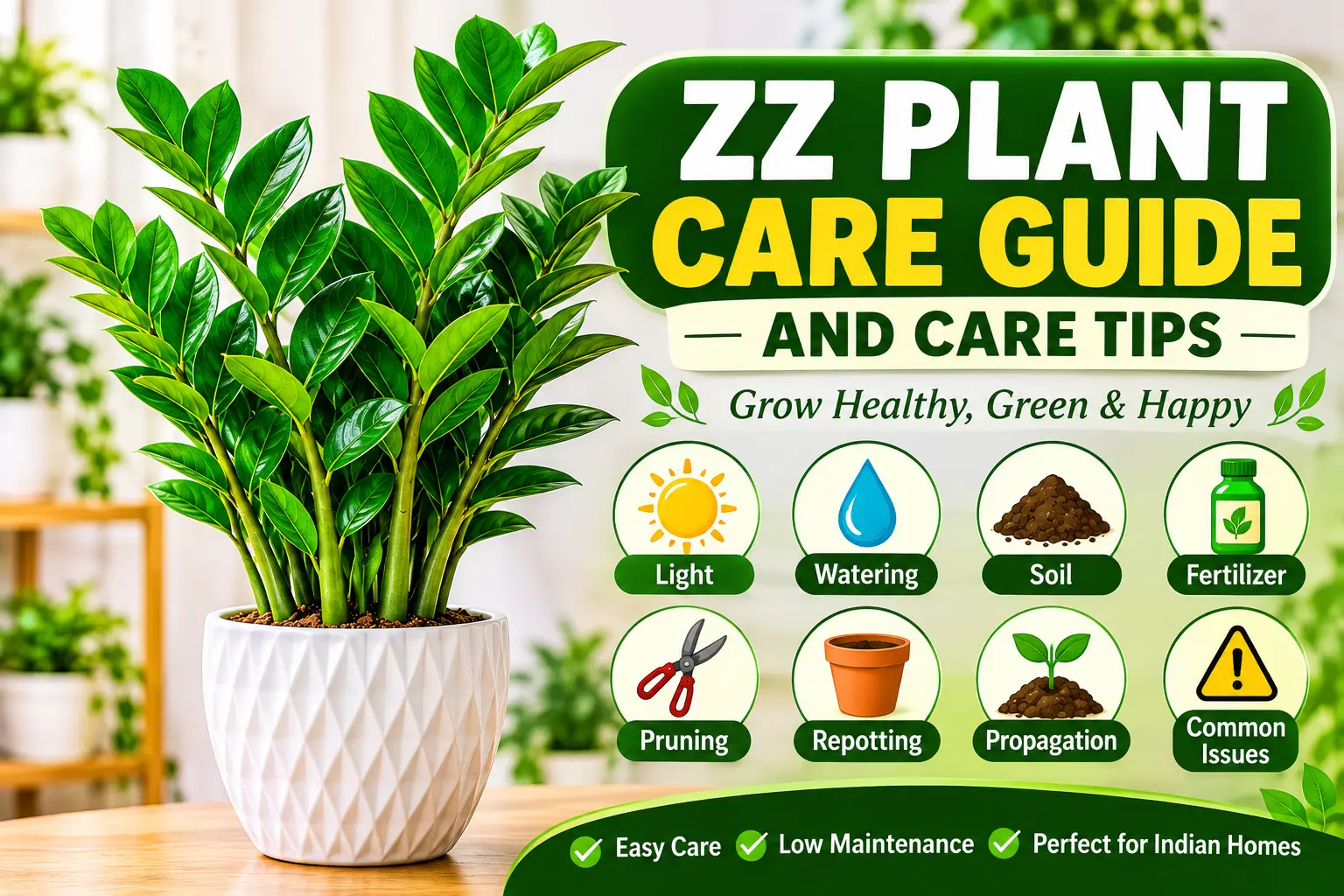
The ZZ Plant (Zamioculcas zamiifolia) is one of the most popular indoor plants for homes, offices, and modern interiors. Known for its glossy green leaves, elegant upright growth, and exceptional ability to tolerate low-light conditions, the ZZ Plant is an excellent choice for beginners and experienced plant lovers alike.
Whether you want to decorate your living room, add greenery to your office, or find an indoor plant that requires minimal maintenance, the ZZ Plant is a wonderful option.
Native to Eastern Africa, this tropical perennial has thick underground rhizomes that store water, allowing it to survive periods of drought and irregular watering. It grows slowly, maintains an attractive appearance throughout the year, and adapts well to typical indoor environments in India.
In this complete ZZ Plant care guide, you will learn everything about growing ZZ Plants in India, including sunlight requirements, watering schedules, soil preparation, propagation, fertilization, common problems, and expert maintenance tips.
1. What Is a ZZ Plant?
The ZZ Plant, scientifically known as Zamioculcas zamiifolia, is a tropical perennial belonging to the Araceae family. It is admired for its thick, fleshy stems and naturally glossy, dark green leaves arranged along upright branches.
Its underground rhizomes store water and nutrients, making it naturally drought-tolerant and relatively easy to maintain.
ZZ Plant Information
| Feature | Details |
|---|---|
| Botanical Name | Zamioculcas zamiifolia |
| Common Name | ZZ Plant |
| Other Names | Zanzibar Gem, Eternity Plant |
| Family | Araceae |
| Plant Type | Tropical perennial |
| Native Region | Eastern Africa |
| Plant Height | Approximately 2–4 feet indoors |
| Light Requirement | Low to bright indirect light |
| Water Requirement | Low |
| Soil Type | Well-draining potting mix |
| Growth Rate | Slow to moderate |
| Maintenance | Very low |
| Ideal Location | Indoor homes and offices |
| Propagation | Division and leaf cuttings |
The ZZ Plant is particularly suitable for Indian households because it can adapt to indoor conditions and does not require frequent watering.
2. Benefits of Growing a ZZ Plant at Home
The ZZ Plant offers several advantages beyond its attractive appearance.
1. Easy to Maintain
One of the biggest advantages of the ZZ Plant is its low-maintenance nature. It does not require daily watering, frequent pruning, or complicated care routines.
2. Suitable for Low-Light Interiors
Unlike many indoor plants, the ZZ Plant can tolerate relatively low-light conditions. This makes it suitable for offices, bedrooms, and indoor spaces that receive limited natural sunlight.
However, brighter indirect light generally encourages healthier and faster growth.
3. Drought Tolerant
Its underground rhizomes store water, allowing the plant to survive periods of dryness. This makes it a suitable choice for people who occasionally forget to water their plants.
4. Attractive Indoor Decoration
The glossy foliage and upright growth make the ZZ Plant an elegant decorative addition to:
- Living rooms
- Bedrooms
- Office desks
- Reception areas
- Study rooms
- Commercial interiors
5. Long-Lasting Indoor Plant
With suitable growing conditions, a ZZ Plant can remain healthy for many years. Its evergreen foliage makes it an excellent long-term addition to your indoor plant collection.
Important: Although ZZ Plants are sometimes marketed as air-purifying plants, laboratory studies do not establish that ordinary houseplants can significantly improve indoor air quality under typical home conditions.
3. Popular Types and Varieties of ZZ Plants
The classic green ZZ Plant is the most widely available variety, but several attractive cultivars are popular among indoor gardening enthusiasts.
Green ZZ Plant
The traditional ZZ Plant features glossy, dark green leaves and upright stems. It is widely appreciated for its adaptability and simple maintenance requirements.
Raven ZZ Plant
The Raven ZZ Plant is known for its dramatic, nearly black mature foliage. New leaves initially emerge bright green before gradually developing their distinctive dark colour.
ZZ Zenzi
ZZ Zenzi is a compact variety with shorter stems and closely arranged, curled leaves. It is suitable for desks, shelves, and smaller indoor spaces.
Variegated ZZ Plant
This relatively uncommon variety features green foliage with cream or yellow variegation. Its distinctive appearance makes it attractive to plant collectors.
4. Ideal Growing Conditions for ZZ Plants in India
ZZ Plants are adaptable, but providing the right growing environment will help maintain healthy foliage and encourage new growth.
| Growing Factor | Ideal Conditions |
|---|---|
| Sunlight | Bright indirect light |
| Temperature | 18°C–30°C |
| Humidity | Normal household humidity |
| Soil | Loose and well-draining |
| Watering | Only when soil dries sufficiently |
| Location | Indoor or shaded outdoor areas |
Best Location for ZZ Plants
Place your ZZ Plant near a window where it receives filtered natural light. East-facing windows are often suitable, while north-facing windows may also work depending on the amount of available light.
Avoid exposing the plant to intense afternoon sunlight, particularly during Indian summers.
5. Best Soil for ZZ Plants
Proper soil is essential for healthy ZZ Plant growth because its underground rhizomes are vulnerable to excessive moisture and root rot.
The best soil should be loose, aerated, and capable of draining excess water quickly.
Recommended ZZ Plant Soil Mix
For a healthy growing medium, combine:
- 2 parts quality potting soil
- 1 part perlite or pumice
- 1 part coarse sand or coco chips
You can also add a small quantity of well-decomposed compost to improve nutrient availability.
Choosing the Right Pot
Choose a pot with drainage holes at the bottom. Terracotta pots are particularly useful because they allow excess moisture to evaporate more easily.
Avoid oversized containers because excessive soil around the roots can remain wet for longer periods.
6. How Often Should You Water a ZZ Plant?
Overwatering is one of the most common reasons ZZ Plants develop yellow leaves and root rot.
Because the plant stores water in its underground rhizomes, it can tolerate dry soil better than consistently wet soil.
ZZ Plant Watering Schedule in India
| Season | General Watering Guidance |
|---|---|
| Summer | Approximately every 2–3 weeks |
| Monsoon | Approximately every 3–4 weeks or longer |
| Winter | Approximately every 3–5 weeks or longer |
These are approximate intervals, not fixed watering rules. Actual requirements depend on temperature, humidity, pot size, soil composition, and indoor ventilation.
Expert Tip: Check the soil before watering. Allow most or all of the potting mix to dry before watering again. When watering, water thoroughly until excess water drains from the bottom.
Never allow the plant to sit in standing water.
7. ZZ Plant Sunlight Requirements
The ZZ Plant is famous for tolerating low-light conditions, which makes it one of the most convenient indoor plants.
However, low-light tolerance does not mean that the plant can grow without light.
Recommended Light Conditions
- Bright indirect light: Ideal for healthy growth.
- Medium indirect light: Suitable for regular maintenance.
- Low light: Tolerated, but growth may become very slow.
- Direct afternoon sunlight: Avoid, as it can burn the foliage.
If your ZZ Plant is growing very slowly, moving it closer to a bright window may improve its growth.
8. Best Temperature and Humidity for ZZ Plants
ZZ Plants prefer warm conditions and generally perform well in typical Indian indoor environments.
The ideal temperature range is approximately 18°C–30°C.
Protect your plant from:
- Temperatures below 10°C.
- Cold winter drafts.
- Direct exposure to air-conditioner vents.
- Sudden temperature fluctuations.
Average indoor humidity is usually sufficient. Unlike some tropical plants, ZZ Plants do not require regular misting.
9. Fertilizer Requirements for ZZ Plants
ZZ Plants are not heavy feeders. However, occasional fertilization during the active growing season can support healthy foliage and new growth.
Recommended Fertilizer
Use a balanced liquid indoor-plant fertilizer at half the manufacturer’s recommended concentration.
Fertilizing Schedule
- Growing season: March to September, depending on local temperatures.
- Frequency: Approximately once every 6–8 weeks.
- Winter: Usually no fertilizer is required if growth slows.
Avoid excessive fertilizer application because accumulated salts can damage roots and cause brown leaf tips.
10. How to Prune and Clean a ZZ Plant
ZZ Plants generally require very little pruning.
Remove yellow, damaged, or dried stems using clean and sterilized pruning scissors.
Basic Maintenance Tips
- Remove dead or unhealthy stems near the soil surface.
- Wipe dusty leaves with a soft, damp cloth.
- Remove fallen leaves from the pot.
- Inspect the foliage regularly for pests.
- Rotate the pot occasionally to encourage balanced growth.
Do not cut healthy stems unnecessarily, as this can reduce the plant’s ability to produce new foliage.
11. When and How to Repot a ZZ Plant
ZZ Plants grow relatively slowly and do not require frequent repotting.
Generally, repotting every 2–3 years is sufficient, although the actual timing depends on growth and root development.
Signs Your ZZ Plant Needs Repotting
- Roots are emerging from drainage holes.
- Rhizomes are crowding the existing pot.
- The pot is becoming distorted or cracked.
- Water passes through the soil unusually quickly.
- The plant has outgrown its container.
Repotting Steps
- Select a pot approximately 1–2 inches wider than the existing one.
- Carefully remove the plant from its old container.
- Inspect the rhizomes and remove any rotten portions.
- Transfer the plant into fresh, well-draining potting soil.
- Keep the plant in bright indirect light while it establishes.
Avoid unnecessary watering immediately after repotting if the soil is already moist or damaged roots were removed.
12. How to Propagate ZZ Plants
You can propagate ZZ Plants through division or leaf cuttings.
Method 1: Propagation Through Rhizome Division
This is generally the quickest and most reliable propagation method.
- Remove the mature plant from its container.
- Gently separate the underground rhizomes.
- Ensure each division has healthy roots and at least one growing stem or growth point.
- Plant each division in a separate pot.
- Keep the potting mix lightly moist initially, then follow the normal drying cycle.
Method 2: Propagation Through Leaf Cuttings
ZZ Plants can also grow from individual leaf cuttings, although this method requires considerable patience.
- Select a healthy leaf.
- Cut it carefully using clean scissors.
- Allow the cut surface to dry briefly.
- Insert the leaf base into a well-draining propagation medium.
- Maintain suitable warmth and avoid excessive watering.
- Wait for roots and a small rhizome to develop.
Leaf propagation can take several months, and producing a mature plant may take considerably longer.
13. Common ZZ Plant Problems and Their Solutions
Although ZZ Plants are hardy, incorrect watering and unsuitable growing conditions can affect their health.
| Problem | Possible Cause | Solution |
|---|---|---|
| Yellow Leaves | Overwatering or natural ageing | Check soil moisture and roots |
| Brown Leaf Tips | Water stress or fertilizer buildup | Review watering and feeding |
| Soft Stems | Excessive moisture or root rot | Remove rotten parts and repot |
| Wrinkled Stems | Prolonged underwatering | Check soil and water thoroughly |
| Slow Growth | Low light or natural dormancy | Provide brighter indirect light |
| Drooping Stems | Watering problems or poor light | Inspect roots and growing conditions |
| Pale Leaves | Insufficient light or nutrient issues | Improve light and review fertilization |
How to Prevent Root Rot
Root rot is one of the most serious problems affecting ZZ Plants.
To prevent it:
- Always use pots with drainage holes.
- Avoid watering when the soil is still wet.
- Use an airy potting mix.
- Never leave excess water in the saucer.
- Check the rhizomes when repotting if the plant develops soft stems or persistent yellowing.
14. ZZ Plant Vastu and Feng Shui Benefits
The ZZ Plant is often associated with prosperity, good fortune, growth, and positive energy in Vastu and Feng Shui traditions.
Its upright growth and attractive foliage make it a popular choice for homes and workplaces.
Some traditional placement suggestions include:
- Southeast corner of the home.
- Living room.
- Office reception.
- Workplace entrances.
- Study or work areas.
These associations are based on traditional beliefs and should not be considered scientifically proven benefits.
15. Is the ZZ Plant Toxic to Pets and Children?
Yes. ZZ Plants contain insoluble calcium oxalate crystals, which can cause irritation if plant parts are chewed or swallowed.
Possible symptoms include:
- Mouth and throat irritation.
- Burning sensation.
- Excessive drooling.
- Difficulty swallowing.
- Stomach discomfort.
Keep the plant away from small children and pets.
Wear gloves when pruning or dividing the plant if you have sensitive skin, and wash your hands after handling it.
If ingestion occurs, contact a medical professional or veterinarian for appropriate advice.
16. Why Is the ZZ Plant Perfect for Offices and Beginners?
The ZZ Plant is an excellent choice for people who want attractive indoor greenery without spending too much time on maintenance.
Its advantages include:
- Tolerates low-light conditions.
- Requires infrequent watering.
- Does not need regular misting.
- Maintains attractive foliage throughout the year.
- Suitable for offices and commercial interiors.
- Grows well in containers.
It is particularly useful for people who are new to gardening or have busy schedules.
17. Indoor Decoration Ideas Using ZZ Plants
The ZZ Plant’s elegant structure makes it suitable for several interior design styles.
Living Room
Place a medium or large ZZ Plant in a decorative ceramic planter near a bright window.
Bedroom
A compact ZZ Plant can add a natural decorative element to a bedroom corner.
Office Desk
Choose a small ZZ Plant in a stylish tabletop planter.
Reception and Commercial Spaces
Larger ZZ Plants can enhance the appearance of reception areas, hotel lobbies, and office interiors.
Modern Interior Styling
Pair the dark green foliage with white, beige, black, or earthy-toned planters for an attractive contemporary look.
18. Seasonal ZZ Plant Care Tips in India
Indian weather varies considerably across regions, so adjust your watering and placement according to local conditions.
Summer Care
- Keep the plant away from harsh afternoon sunlight.
- Check soil moisture before watering.
- Protect it from excessive heat.
- Maintain suitable indoor ventilation.
Monsoon Care
- Reduce watering because humidity is higher.
- Check drainage regularly.
- Avoid leaving the pot in standing rainwater.
- Watch for signs of fungal problems and root rot.
Winter Care
- Reduce watering as soil dries more slowly.
- Keep the plant away from cold drafts.
- Avoid placing it directly beside cold windows.
- Stop fertilizing if growth becomes inactive.
19. ZZ Plant vs. Snake Plant: Which Is Better?
Both ZZ Plants and Snake Plants are popular low-maintenance indoor plants. However, they differ in appearance, growing habits, and environmental preferences.
| Feature | ZZ Plant | Snake Plant |
|---|---|---|
| Botanical Name | Zamioculcas zamiifolia | Dracaena trifasciata |
| Appearance | Glossy oval leaves | Upright sword-shaped leaves |
| Water Requirement | Low | Very low |
| Light Requirement | Low to bright indirect | Low to bright indirect |
| Growth Habit | Upright, clumping | Vertical, spreading |
| Maintenance | Very low | Very low |
| Pet Safety | Toxic if ingested | Toxic if ingested |
| Best Use | Indoor corners and offices | Living rooms and hallways |
Which should you choose?
Choose the ZZ Plant if you prefer glossy foliage and a fuller, elegant appearance. Choose the Snake Plant if you prefer tall, architectural leaves and a more sculptural look.
Both are excellent additions to an indoor plant collection.
20. Frequently Asked Questions About ZZ Plants
Q1. Is the ZZ Plant suitable for Indian weather?
es. ZZ Plants generally adapt well to warm Indian indoor environments when protected from excessive direct sunlight, cold temperatures, and overwatering.
Q2. How often should I water my ZZ Plant?
Yes. ZZ Plants generally adapt well to warm Indian indoor environments when protected from excessive direct sunlight, cold temperatures, and overwatering.
Q3. Can ZZ Plants grow without sunlight?
No plant can grow indefinitely without light. However, ZZ Plants tolerate low-light environments and can survive in spaces with limited natural light.
Q4. Is the ZZ Plant good for bedrooms?
Yes. It is a popular decorative indoor plant for bedrooms because it requires little maintenance and tolerates indirect light.
Q5. Does the ZZ Plant need direct sunlight?
No. Bright indirect sunlight is preferable. Strong direct afternoon sunlight can damage its leaves.
Q6. Why are my ZZ Plant leaves turning yellow?
Overwatering is a common cause. However, natural ageing, poor drainage, and root damage can also cause yellowing
Q7. How fast does a ZZ Plant grow?
ZZ Plants are naturally slow-growing. New stems may emerge periodically during favourable growing conditions.
Q8. Can I grow a ZZ Plant in water?
Leaf cuttings can be rooted in water, but growing a mature ZZ Plant in water permanently is not generally recommended. A well-draining potting mix is more suitable.
Q9. Is the ZZ Plant safe for cats and dogs?
No. It contains calcium oxalate crystals and should be kept away from pets that may chew its leaves or stems.
Q10. How long does a ZZ Plant live?
With suitable care, a ZZ Plant can remain healthy for many years, making it a long-lasting indoor plant.
21. Buy a Healthy ZZ Plant Online in India
Looking for a beautiful, low-maintenance indoor plant for your home or office?
The ZZ Plant (Zamioculcas zamiifolia) is an excellent choice for anyone who wants to enjoy natural greenery without complicated maintenance.
At MyPlant.in, explore our collection of indoor plants and discover attractive plants suitable for Indian homes, offices, and modern interiors.
Whether you are purchasing your first houseplant or adding another beautiful variety to your collection, the ZZ Plant is a timeless choice.
Bring home a ZZ Plant and add a touch of natural elegance to your space.
Explore our collection: Shop Indoor Plants at MyPlant.in