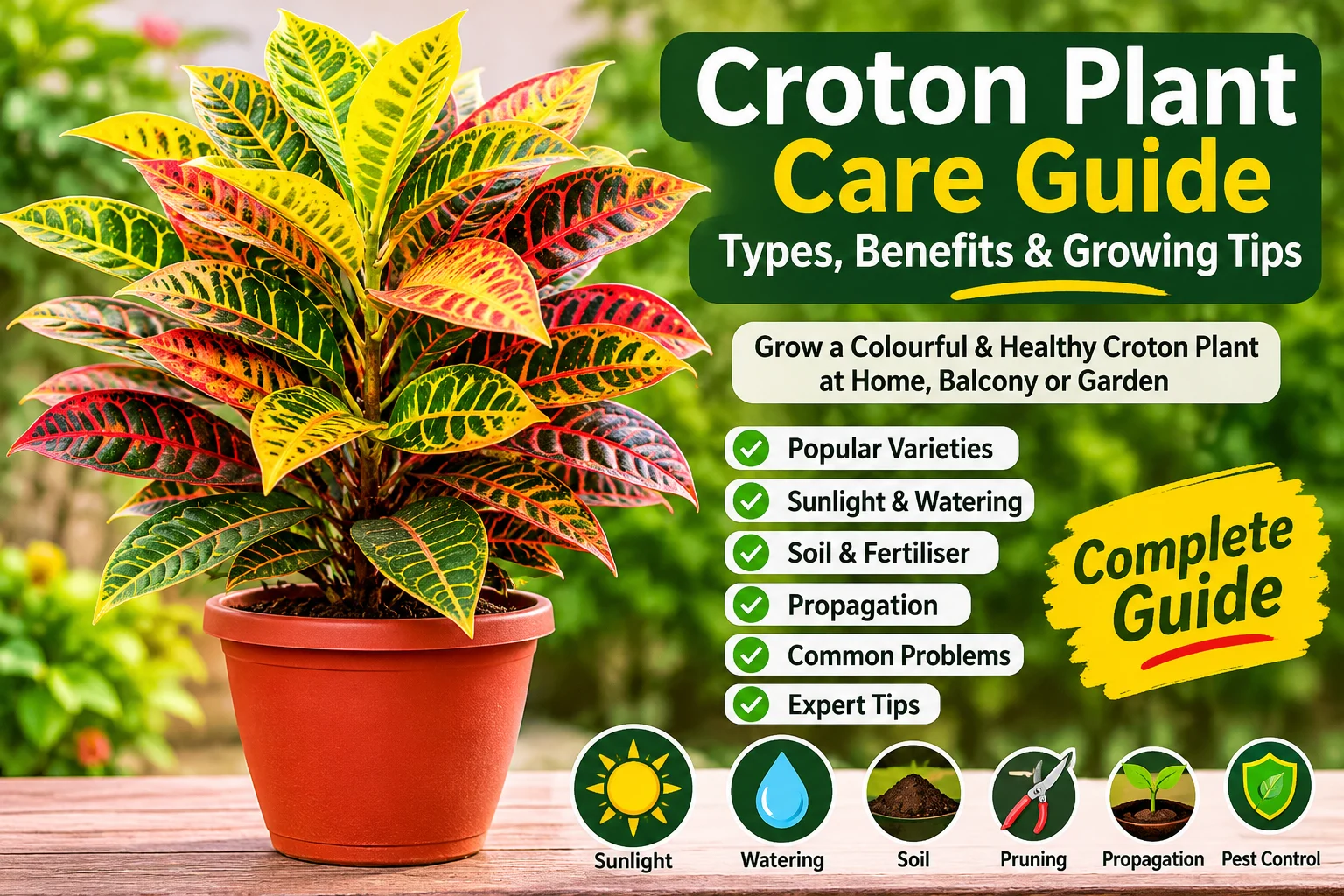
The Croton plant is one of the most colourful and attractive ornamental plants for homes, balconies, gardens and landscapes. Unlike ordinary foliage plants that mainly feature green leaves, Croton plants display stunning combinations of red, yellow, orange, pink, purple and green.
Scientifically known as Codiaeum variegatum, Croton is a tropical evergreen shrub widely appreciated for its decorative foliage. Its attractive leaf patterns, different shapes and vibrant colours make it a popular choice among gardening enthusiasts.
Whether you want to decorate your balcony, add colour to your garden, create an attractive landscape or grow a beautiful foliage plant in a decorative pot, Croton can be an excellent choice.
However, maintaining its beautiful colours requires the right amount of sunlight, proper watering, suitable soil and a warm growing environment.
In this complete Croton plant care guide, you will learn about different Croton varieties, plant characteristics, benefits, sunlight requirements, watering schedules, soil preparation, propagation, common problems and everything you need to know about growing Croton plants successfully in India.
1. What Is a Croton Plant?
Croton, botanically known as Codiaeum variegatum, is a tropical evergreen ornamental shrub belonging to the Euphorbiaceae family.
It is cultivated primarily for its colourful, leathery and decorative leaves. Depending on the variety, its foliage can display different patterns, including colourful veins, spots, stripes and contrasting shades.
Croton plants are popular in tropical and subtropical gardens because they can provide attractive foliage throughout the year under suitable growing conditions.
Croton Plant Information
| Plant Characteristic | Details |
|---|---|
| Common Name | Croton Plant, Garden Croton |
| Botanical Name | Codiaeum variegatum |
| Family | Euphorbiaceae |
| Plant Type | Tropical evergreen shrub |
| Origin | Southeast Asia and Pacific regions |
| Plant Height | Approximately 30 cm to 3 metres, depending on cultivar and conditions |
| Leaf Colours | Red, Yellow, Orange, Green, Pink and Purple |
| Sunlight | Bright light to partial sunlight |
| Water Requirement | Moderate |
| Soil Type | Fertile and well-draining |
| Growth Rate | Moderate |
| Propagation | Stem cuttings |
| Maintenance | Moderate |
| Flowering | Small, inconspicuous flowers |
| Growing Location | Indoor, Balcony, Garden and Outdoor |
| Main Purpose | Ornamental foliage and landscaping |
What Is the Common Name of Croton in India?
Croton is commonly sold and recognised by the name Croton or Garden Croton in India.
Some people also associate it with the name Pata Bahar, although common names can vary between regions and plant species. It is best to identify the plant by its botanical name, Codiaeum variegatum.
Is Croton a Tree, Shrub or Herb?
Croton is an evergreen tropical shrub. Under favourable conditions, it can develop woody stems and grow into a small tree-like plant.
When cultivated in pots, its height and overall growth can be controlled through pruning and container selection.
Is Croton an Indoor or Outdoor Plant?
Croton can be grown both indoors and outdoors, but it requires sufficient light to maintain its colourful foliage.
Outdoor growing is generally easier in warm climates where the plant receives bright filtered light or suitable sunlight.
For indoor cultivation, place Croton near a bright window, balcony entrance or another location with sufficient natural light. It is not recommended for dark rooms.
2. Different Types of Croton Plants
One of the most interesting characteristics of Croton plants is their incredible diversity.
Different cultivars feature unique leaf shapes, colours, patterns and growth habits. Some have broad leaves, while others produce narrow, twisted or elongated foliage.
Here are some popular Croton varieties.
Croton Petra
Croton Petra is one of the most popular ornamental Croton cultivars.
Its large leaves feature attractive combinations of green, yellow, orange and red. The colourful veins and contrasting patterns make it suitable for decorative pots, balconies and landscaping.
Croton Gold Dust
Gold Dust Croton is recognised by its dark green leaves covered with small yellow or golden spots.
Its distinctive foliage makes it an attractive option for garden decoration and ornamental plant collections.
Croton Mammy
Croton Mammy is famous for its narrow, twisted and curled leaves.
Its foliage often displays beautiful shades of red, orange, yellow and green, giving the plant a distinctive appearance.
Croton Zanzibar
Zanzibar Croton produces long, narrow and colourful leaves.
Its grass-like foliage and upright growth make it different from broad-leaved Croton varieties.
Croton Magnificent
Magnificent Croton is known for its broad and colourful foliage.
Its leaves can feature combinations of green, yellow, orange, red and purple, making it suitable for decorative landscapes.
Croton Oakleaf
Oakleaf Croton has uniquely shaped leaves resembling oak leaves.
Its foliage can display multiple colours, making it an interesting choice for ornamental gardening.
Croton Banana
Banana Croton features narrow, elongated leaves that resemble the shape of banana leaves.
Its unusual foliage provides a different appearance compared with traditional broad-leaved varieties.
Croton Bush on Fire
Bush on Fire is an attractive cultivar with colourful foliage featuring red, yellow, orange and green shades.
It is particularly appreciated for its vibrant appearance.
Croton Eleanor Roosevelt
This variety is known for its long, narrow leaves covered with attractive yellow spots.
It can develop beautiful contrasting foliage under suitable lighting conditions.
Other Popular Croton Varieties
Other varieties include:
- Mrs. Iceton Croton
- Sunny Star Croton
- Yellow Iceton Croton
- Zanzibar Croton
- Gold Star Croton
- Red Iceton Croton
The availability of individual cultivars may vary between nurseries.
3. How to Grow Croton Plants in India
Croton plants can grow successfully in many parts of India, particularly in warm and humid conditions.
However, different regions experience different temperatures, humidity levels and seasonal conditions. Therefore, watering and sunlight requirements should be adjusted according to the local climate.
Best Location for Growing Croton
You can grow Croton in:
- Home gardens
- Balconies
- Terraces
- Outdoor decorative pots
- Garden borders
- Patios
- Bright indoor spaces
- Office entrances
Choose a location that receives sufficient natural light and is protected from extreme environmental conditions.
Can Croton Grow in Indian Summers?
Yes. Croton can grow well during Indian summers when provided with suitable sunlight, watering and protection from extreme heat.
During very hot weather, protect potted plants from harsh afternoon sunlight if their leaves begin to scorch.
Check soil moisture regularly because smaller pots can dry out quickly.
Can Croton Grow During the Indian Monsoon?
Yes. Monsoon is generally suitable for Croton growth because of warm temperatures and increased humidity.
However, excessive rainfall and waterlogged soil can damage the roots.
Ensure that:
- Pots have sufficient drainage holes.
- Water does not accumulate around the roots.
- Plants receive adequate air circulation.
- Fungal problems are identified early.
Can Croton Survive Indian Winters?
Croton is a tropical plant and does not tolerate prolonged cold conditions well.
In North India, particularly during December and January, protect potted Crotons from cold winds and very low temperatures.
Keep them in a bright, sheltered location and reduce watering when growth slows.
4. How Much Sunlight Does a Croton Plant Need?
Sunlight is one of the most important factors affecting Croton’s leaf colour and growth.
Croton plants generally prefer bright light. Suitable sunlight encourages vibrant foliage, healthy growth and stronger leaf colouration.
Best Sunlight for Croton
- Provide bright natural light throughout the day.
- Gentle morning sunlight is beneficial.
- Approximately 4–6 hours of suitable sunlight can work well for many varieties.
- Protect plants from excessive harsh afternoon sunlight.
- Indoor plants should be placed near bright windows.
The exact sunlight requirement depends on the cultivar and how gradually it has been acclimatised to direct sunlight.
Can Croton Grow in Full Sun?
Yes, some Croton varieties can tolerate considerable direct sunlight, particularly when grown outdoors and gradually acclimatised.
However, suddenly moving a plant from shade to intense sunlight can cause leaf scorching.
Can Croton Grow in Shade?
Croton can tolerate partial shade, but deep shade is not recommended.
Insufficient light may cause:
- Loss of vibrant leaf colours.
- Reduced growth.
- Smaller leaves.
- Leaf dropping.
- Weak and stretched stems.
Why Is My Croton Plant Losing Its Colour?
Insufficient sunlight is a common reason for fading Croton foliage.
Move the plant gradually to a brighter location. Do not expose a previously shaded plant immediately to intense afternoon sunlight.
New leaves generally develop their characteristic colours as they mature.
5. How Often Should You Water a Croton Plant?
Croton prefers moderately moist soil but does not tolerate waterlogged conditions.
The most reliable method is to check the soil before watering instead of following a fixed daily schedule.
Croton Watering Schedule
| Season | Watering Guidance |
|---|---|
| Summer | Check soil frequently and water when the upper layer dries |
| Monsoon | Water only when necessary; prevent waterlogging |
| Autumn | Maintain moderate soil moisture |
| Winter | Reduce watering as growth slows |
How to Water Croton Correctly
- Check the top 2–3 cm of soil.
- If the soil feels dry, water thoroughly.
- Allow excess water to drain through the bottom.
- Empty any water collected in the pot saucer.
- Avoid watering again while the soil remains excessively wet.
Can You Overwater a Croton Plant?
Yes. Overwatering is one of the common reasons for Croton problems.
Excessive moisture can cause root rot, yellow leaves, wilting and leaf dropping.
Can Croton Survive Without Water for Several Days?
A healthy Croton can tolerate short periods without watering, depending on its growing environment.
However, prolonged dryness can cause drooping, crispy leaves and leaf loss.
Avoid allowing the root ball to become completely dry for extended periods.
6. What Is the Best Soil for Croton Plants?
Croton grows best in fertile soil that retains moderate moisture while allowing excess water to drain freely.
Heavy clay soil and poorly drained potting mixtures should be avoided.
Recommended Croton Potting Mix
You can prepare a suitable growing mixture using:
| Ingredient | Quantity |
|---|---|
| Garden Soil | 30% |
| Cocopeat | 20% |
| Vermicompost | 20% |
| Perlite or Coarse Sand | 20% |
| Leaf Compost | 10% |
Mix all ingredients properly before planting.
This mixture provides a balance of moisture retention, organic matter and drainage.
What Is the Best Soil pH for Croton?
Croton generally prefers slightly acidic to neutral growing conditions.
Avoid allowing excessive mineral or salt accumulation in the potting mixture.
Can Croton Grow in Normal Garden Soil?
Yes, provided the garden soil is fertile, sufficiently loose and well-draining.
For container cultivation, improving the soil with organic matter and drainage materials is recommended.
7. Best Pot Size for Croton Plants
Selecting the correct pot is important for healthy root development.
Choose a pot that is slightly larger than the plant’s existing root ball.
Recommended Pot Sizes
| Plant Size | Suggested Pot Diameter |
|---|---|
| Small Plant | 6–8 inches |
| Medium Plant | 8–12 inches |
| Large Plant | 12–16 inches |
These are general suggestions rather than fixed requirements.
Always select a pot with drainage holes. An excessively large container may retain unnecessary moisture and increase the risk of root problems.
8. How to Repot a Croton Plant
Repotting becomes necessary when the roots begin filling the container, drainage becomes poor or the growing medium deteriorates.
Follow these steps:
- Select a slightly larger pot.
- Prepare fresh, well-draining potting soil.
- Carefully remove the plant from its existing container.
- Inspect the roots for damaged or rotten sections.
- Place the plant in the new pot.
- Fill the remaining space with potting mixture.
- Water lightly to settle the soil.
- Keep the plant in bright, indirect light while it adjusts.
Avoid unnecessary repotting because Croton can experience temporary stress after root disturbance.
9. What Is the Best Fertiliser for Croton Plants?
Croton benefits from regular but balanced nutrition during its active growing period.
You can use:
- Balanced NPK fertiliser.
- Vermicompost.
- Well-decomposed compost.
- Suitable liquid plant fertiliser.
How Often Should You Fertilise Croton?
A light application of balanced fertiliser every 4–6 weeks during active growth is a reasonable starting point.
Always follow the fertiliser manufacturer’s dosage instructions.
Reduce feeding during winter when plant growth slows.
Is Vermicompost Good for Croton?
Yes. Vermicompost can improve soil structure and provide organic nutrients.
Apply a moderate quantity around the soil surface without covering the plant’s stem.
Can Excess Fertiliser Damage Croton?
Yes. Excess fertiliser may cause leaf-tip burning, root damage and salt accumulation.
Avoid applying concentrated fertiliser to dry soil.
10. What Are the Benefits of Croton Plants?
Croton is primarily cultivated for its ornamental and landscaping value.
Its colourful foliage provides several decorative advantages.
1. Attractive Home Decoration
Croton adds natural colour to living spaces, balconies and terraces.
2. Beautiful Garden Landscaping
Its contrasting foliage creates visual interest when planted alongside green shrubs and other ornamental plants.
3. Year-Round Foliage
Croton is an evergreen shrub that can maintain its leaves throughout the year under suitable conditions.
4. Different Colour Combinations
The availability of multiple cultivars makes it possible to create attractive decorative arrangements.
5. Suitable for Container Gardening
Croton grows well in containers and can be used to decorate entrances, patios and balconies.
6. Useful for Garden Borders
Larger Croton plants can be used as ornamental border plants or focal points in landscaping.
7. Attractive Non-Flowering Colour
Unlike plants that depend on flowers for their decorative appeal, Croton provides colour mainly through its foliage.
Important: Croton is not a proven air-purifying solution or an edible medicinal plant. Its primary value is ornamental.
11. Is Croton a Good Indoor Plant?
Yes. Croton can be grown indoors, but it requires sufficient natural light.
It is not suitable for dark corners or rooms without adequate lighting.
Best Indoor Placement for Croton
- Near bright windows.
- In well-lit living rooms.
- Near balcony entrances.
- In bright office spaces.
- In areas with suitable natural light.
Can Croton Grow in an Air-Conditioned Room?
It can, but continuous exposure to cold, dry air from an air conditioner may stress the plant.
Keep it away from direct AC airflow and maintain suitable moisture and humidity.
Can Croton Grow in a Bedroom?
Yes, provided the bedroom receives sufficient natural light.
However, because Croton is toxic if ingested, avoid placing it where children or pets can chew its leaves.
Can Croton Grow Without Sunlight?
Croton requires light for healthy growth. It cannot thrive indefinitely without suitable light.
If natural light is insufficient, an appropriate grow light may help.
12. How to Make a Croton Plant Bushy?
A bushy Croton plant looks fuller and more attractive.
You can encourage branching through selective pruning and suitable growing conditions.
Follow these recommendations:
- Provide sufficient light.
- Prune excessively long stems.
- Make cuts just above healthy leaf nodes.
- Avoid removing too much foliage at once.
- Maintain suitable watering and nutrition.
- Allow the plant time to produce new branches.
Pruning is generally best carried out during active growth.
13. How to Prune a Croton Plant?
Pruning helps maintain the plant’s shape, remove damaged branches and encourage branching.
When Should You Prune Croton?
Spring and the beginning of active growth are generally suitable times.
How to Prune Correctly
- Remove dead and damaged leaves.
- Cut unhealthy branches.
- Trim overgrown stems above a healthy node.
- Use clean and sharp pruning tools.
- Avoid excessive pruning.
Wear gloves because Croton releases milky sap when its stems or leaves are damaged.
14. How to Propagate Croton Plants?
Croton can be propagated through stem cuttings.
Propagation is generally performed during warm growing conditions.
Step-by-Step Propagation Method
Step 1: Select a Healthy Stem
Choose a healthy, semi-mature stem from an established plant.
Step 2: Prepare the Cutting
Take a cutting approximately 10–15 cm long with a few healthy leaves.
Step 3: Handle the Sap Carefully
Croton releases milky sap after cutting. Wear gloves and avoid contact with skin and eyes.
Step 4: Prepare the Growing Medium
Use a clean, moist and well-draining propagation mixture.
Step 5: Plant the Cutting
Remove the lower leaves and insert the cut end into the propagation medium.
Step 6: Maintain Suitable Conditions
Keep the cutting in a warm location with bright indirect light.
Step 7: Wait for Root Development
Rooting may take several weeks, depending on temperature and growing conditions.
Step 8: Transplant the New Plant
Once the cutting develops a healthy root system and new growth, transfer it to a suitable pot.
Can Croton Be Propagated in Water?
Yes, some stem cuttings can develop roots in water.
However, water propagation requires careful monitoring, and the cutting must be transferred to a suitable growing medium after sufficient root development.
Can Croton Be Grown from Seeds?
Yes. Croton can produce seeds, but propagation through stem cuttings is generally preferred for maintaining the characteristics of a particular cultivated variety.
15. Why Is My Croton Plant Losing Leaves?
Leaf dropping is one of the most frequently experienced problems with Croton plants.
Sometimes a newly purchased Croton loses several leaves after being brought home. This can happen because of changes in light, temperature, humidity and watering conditions.
Common Reasons for Croton Leaf Dropping
1. Sudden Change in Location
Croton may experience stress when moved from a nursery to a home or when shifted between indoor and outdoor environments.
2. Overwatering
Excessive soil moisture can damage the roots and cause leaves to turn yellow and fall.
3. Underwatering
Prolonged dryness can cause wilting and leaf dropping.
4. Insufficient Sunlight
Poor lighting may weaken growth and reduce foliage quality.
5. Cold Temperature
Sudden exposure to cold winds or low temperatures can cause leaf loss.
6. Low Humidity
Dry air may contribute to leaf damage, particularly indoors.
7. Pest Infestation
Spider mites, scale insects and mealybugs can weaken the plant.
How to Recover a Croton Plant Losing Leaves
- Keep the plant in a stable location.
- Provide sufficient natural light.
- Check soil moisture before watering.
- Ensure proper drainage.
- Inspect leaves for pests.
- Avoid unnecessary repotting and fertilising.
- Give the plant time to adjust.
New healthy growth is a positive sign of recovery.
16. Why Are My Croton Leaves Turning Yellow?
Yellow leaves can develop for several reasons.
The most common possibilities include:
- Overwatering.
- Poor drainage.
- Root damage.
- Insufficient light.
- Natural ageing of older leaves.
- Nutritional problems.
- Pest infestation.
How to Fix Yellow Leaves
First, check the soil.
If the soil remains wet for several days, inspect drainage and reduce watering.
If the plant is in a dark location, gradually move it to brighter light.
If only a few older leaves are turning yellow while new growth remains healthy, it may simply be natural leaf ageing.
17. Why Are Croton Leaves Turning Brown?
Brown leaves and leaf edges are often associated with environmental stress.
Possible causes include:
- Excessive direct sunlight.
- Inconsistent watering.
- Low humidity.
- Fertiliser burn.
- Cold exposure.
- Root problems.
Remove severely damaged leaves and correct the underlying environmental condition.
Avoid cutting healthy foliage unnecessarily.
18. Why Are My Croton Leaves Curling?
Croton leaves may curl because of:
- Water stress.
- Excessive heat.
- Low humidity.
- Pest infestation.
- Sudden environmental changes.
Check both the upper and lower surfaces of the leaves for insects.
Also inspect the soil to determine whether the plant is too dry or excessively wet.
19. Why Is My Croton Plant Not Growing?
Slow growth can occur naturally during cooler months.
However, prolonged lack of growth may indicate:
- Insufficient light.
- Poor soil conditions.
- Damaged roots.
- Inadequate nutrition.
- Incorrect watering.
- An unsuitable pot.
Improve the growing environment before increasing fertiliser.
20. What Are the Common Pests and Diseases of Croton?
Croton is generally manageable when grown under suitable conditions, but it can occasionally develop pest and disease problems.
Common Croton Pests
Mealybugs: Small white insects that gather around stems, leaf joints and leaf undersides.
Spider Mites: Tiny pests that cause pale spots, damaged leaves and sometimes fine webbing.
Scale Insects: Small insects that attach themselves to stems and foliage.
Thrips: Tiny insects that can damage leaves and cause distorted growth.
Common Diseases
Root Rot: Usually associated with prolonged waterlogging and poorly drained soil.
Leaf Spot: May develop due to fungal or bacterial problems, especially when foliage remains wet and airflow is poor.
How to Protect Croton from Pests
- Inspect the plant regularly.
- Remove heavily affected leaves.
- Isolate infected plants.
- Improve air circulation.
- Avoid excessive watering.
- Use an appropriate insecticidal soap or plant treatment according to its label.
21. Does Croton Plant Produce Flowers?
Yes. Mature Croton plants can produce flowers.
However, their flowers are relatively small and insignificant compared with their colourful foliage.
The flowers generally develop in clusters on flowering stems.
Croton is cultivated primarily for its leaves rather than its flowers.
22. Is the Croton Plant Poisonous?
Yes. Croton should be treated as a toxic ornamental plant.
Its milky sap contains irritating substances that may cause skin and eye irritation.
Ingestion of leaves or other plant parts may cause irritation of the mouth and digestive system, vomiting and diarrhoea.
Is Croton Safe for Children?
Croton should be kept away from young children who may touch or chew its leaves.
Is Croton Safe for Cats and Dogs?
No. Croton is considered toxic to pets if ingested.
Keep the plant in a location that cats and dogs cannot access.
Safety Precautions
- Wear gloves when pruning.
- Avoid touching your eyes while handling the plant.
- Wash your hands after gardening.
- Keep fallen leaves away from children and pets.
- Seek appropriate medical or veterinary advice if ingestion occurs.
23. Croton Plant Care During Winter
Winter care is particularly important in North India, where temperatures can fall significantly.
Follow these recommendations:
- Keep Croton away from cold winds.
- Provide bright natural light.
- Reduce watering when growth slows.
- Avoid keeping the pot in standing water.
- Do not apply excessive fertiliser.
- Protect the plant from sudden temperature changes.
Container-grown plants can be moved to a sheltered location when necessary.
24. Croton Plant Care Calendar for India
| Month | Recommended Care |
|---|---|
| January | Protect from cold and reduce watering |
| February | Monitor new growth and sunlight |
| March | Begin regular growing-season care |
| April | Maintain moisture and provide suitable light |
| May | Protect from extreme afternoon heat |
| June | Monitor watering during hot weather |
| July | Check drainage during monsoon |
| August | Inspect for pests and fungal problems |
| September | Maintain moderate moisture |
| October | Remove damaged leaves and maintain sunlight |
| November | Protect from falling temperatures |
| December | Reduce watering and protect from cold winds |
This is a general care calendar. Actual requirements depend on your city, weather and growing conditions.
25. How to Choose a Healthy Croton Plant Before Buying?
Before purchasing a Croton plant, inspect its overall condition.
Here are some useful buying tips:
- Select a plant with healthy and colourful leaves.
- Check that the stems are firm.
- Avoid plants with extensive yellowing or damaged foliage.
- Inspect the underside of leaves for pests.
- Check for signs of root rot or an unpleasant soil smell.
- Select a plant with a healthy root system.
- Choose a variety according to your available growing space.
After purchasing, keep the plant in a suitable location and allow it to adjust gradually to its new environment.
26. Frequently Asked Questions About Croton Plants
Q1. What is the botanical name of Croton?
The botanical name of Garden Croton is Codiaeum variegatum.
Q2. Is Croton an indoor plant or an outdoor plant?
Croton can be grown both indoors and outdoors. However, it needs sufficient light to maintain healthy and colourful foliage.
Q3. Which Croton variety is best for home gardens?
Croton Petra, Gold Dust, Mammy and Zanzibar are popular varieties for home gardens. The best selection depends on your preferred leaf shape, colour and available space.
Q4. How much sunlight does Croton need daily?
Croton generally benefits from bright natural light and suitable direct sunlight. Around 4–6 hours of suitable sunlight can be beneficial, depending on the variety and growing environment.
Q5. How often should I water my Croton plant in summer?
Check the soil regularly and water when the upper 2–3 cm becomes dry. Watering frequency depends on temperature, pot size and sunlight.
Q6. Can Croton grow in direct sunlight?
Yes. Many Croton varieties can tolerate direct sunlight after gradual acclimatisation. Protect plants from excessive harsh afternoon sunlight if scorching occurs.
Q7. Why is my Croton plant losing leaves after buying it?
A change in location, temperature, humidity, sunlight or watering can cause transplant and environmental stress. Maintain stable conditions and give the plant time to adjust.
Q8. Why are my Croton leaves turning green?
Insufficient light is a common reason. Provide brighter natural light to encourage more attractive foliage.
Q9. Why are Croton leaves turning yellow?
Overwatering, poor drainage, insufficient light, root damage and natural ageing can cause yellow leaves.
Q10. Why are Croton leaves turning brown?
Low humidity, irregular watering, excessive sunlight, fertiliser damage and temperature stress can cause brown leaf edges or patches.
Q11. Can Croton grow in water?
Stem cuttings may develop roots in water, but established Croton plants are generally grown in soil-based growing media.
Q12. How can I make my Croton plant bushy?
Provide sufficient light and selectively prune the growing tips to encourage branching.
Q13. How tall can a Croton plant grow?
Depending on the cultivar and growing environment, Croton can grow from a small container plant into a shrub several metres tall.
Q14. Does Croton need pruning?
Pruning is useful for maintaining shape, removing damaged branches and encouraging branching. It is not necessary to prune healthy plants excessively.
Q15. Is Croton a perennial plant?
Yes. Croton is a tropical evergreen perennial shrub.
Q16. Does Croton flower?
Yes. Mature plants can produce small flowers, although they are not the main ornamental feature.
Q17. Can Croton survive winter in India?
Yes, in suitable conditions. Protect it from cold winds and prolonged exposure to low temperatures.
Q18. Can Croton grow in pots?
Yes. Croton grows very well in pots and decorative containers when proper drainage and suitable potting soil are provided.
Q19. What is the best fertiliser for Croton?
A balanced NPK fertiliser and organic compost can support healthy growth. Apply according to the product instructions.
Q20. How long does Croton take to grow?
Growth depends on the variety, climate, light, watering and nutrition. Croton is generally considered a moderate-growing ornamental shrub.
Q21. Is Croton poisonous to humans?
Its sap can irritate the skin and eyes, and ingestion can cause digestive irritation. Avoid consuming any part of the plant.
Q22. Is Croton poisonous to dogs and cats?
Yes. Croton should be kept away from pets because ingestion can cause illness.
Q23. Can Croton grow without sunlight?
No plant can grow healthily without an appropriate light source. Croton requires bright natural light or suitable artificial grow lighting.
Conclusion
Croton is an excellent ornamental plant for anyone who wants to add vibrant natural colours to their home, balcony or garden. Its attractive foliage, multiple varieties and evergreen growth make it a valuable addition to ornamental plant collections.
Although Croton is relatively easy to maintain once established, it requires suitable sunlight, consistent watering, well-draining soil and protection from extreme temperatures.
By following the care instructions in this guide, you can maintain a healthy Croton plant and enjoy its beautiful foliage for many years.
If you are planning to add more colour to your garden, balcony or home, Croton is a wonderful ornamental plant to consider.
Explore the ornamental plant collection at MyPlant.in and discover beautiful plants to enhance your surroundings with natural greenery and colour.