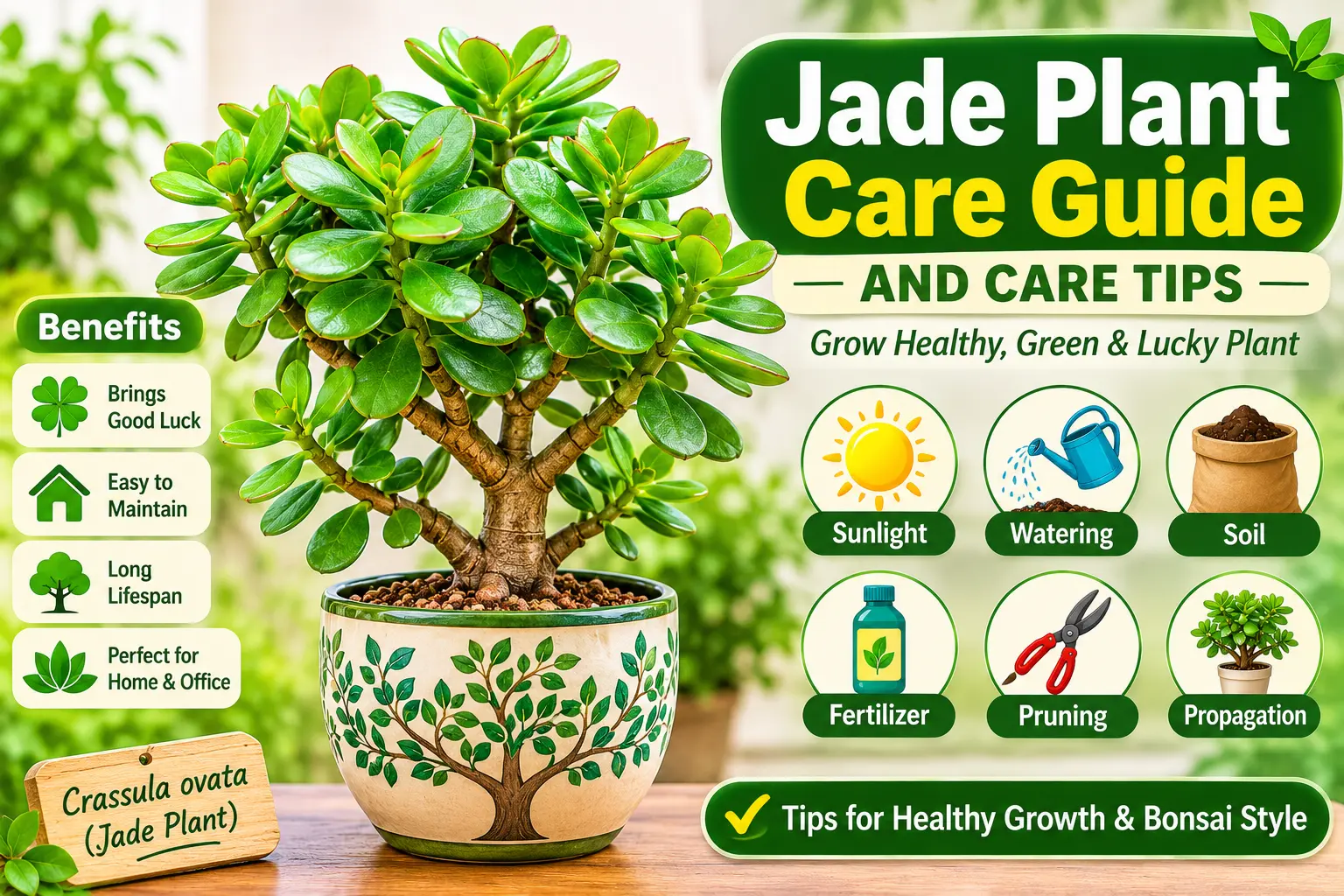
The Jade Plant (Crassula ovata) is one of the most popular and attractive succulents in the world. Known for its thick, fleshy leaves, woody stems, and beautiful tree-like appearance, this evergreen plant is a favourite among indoor gardening enthusiasts, succulent collectors, and bonsai lovers.
Commonly known as the Money Plant, Lucky Jade Plant, Friendship Tree, or Money Tree, it is often associated with prosperity, good fortune, and positive energy. Its attractive appearance and relatively low maintenance requirements make it an excellent choice for homes, offices, balconies, and gardens.
Native to South Africa and Mozambique, the Jade Plant is a drought-tolerant succulent that stores water in its leaves and stems. With proper sunlight, well-draining soil, and controlled watering, it can live for many years and develop a beautiful miniature tree-like structure.
Whether you are a beginner or an experienced plant enthusiast, this complete Jade Plant care guide will help you understand how to grow, maintain, propagate, and enjoy a healthy Jade Plant.
1. What Is a Jade Plant?
The Jade Plant, scientifically known as Crassula ovata, is a perennial succulent belonging to the Crassulaceae family. It is recognised by its thick, oval-shaped, glossy green leaves and sturdy branches.
Its leaves store water, allowing the plant to survive dry conditions and periods of limited watering.
Under suitable growing conditions, mature Jade Plants develop thick, woody stems and a branching structure that resembles a small tree. This makes them particularly attractive for decorative containers and bonsai-style cultivation.
Jade Plant Information
| Feature | Details |
|---|---|
| Botanical Name | Crassula ovata |
| Common Name | Jade Plant |
| Other Names | Money Plant, Friendship Tree, Lucky Plant |
| Family | Crassulaceae |
| Plant Type | Evergreen succulent |
| Native Region | South Africa and Mozambique |
| Plant Height | 1–6 feet or more, depending on growing conditions |
| Sunlight | Bright light to direct sunlight |
| Water Requirement | Low |
| Soil Type | Well-draining succulent soil |
| Growth Rate | Slow to moderate |
| Maintenance | Low |
| Lifespan | Several decades with proper care |
| Propagation | Stem and leaf cuttings |
| Ideal Location | Windowsills, balconies, patios, and gardens |
2. Benefits of Growing a Jade Plant at Home
The Jade Plant is more than just a decorative succulent. Its attractive appearance, adaptability, and traditional symbolism make it a popular choice for plant lovers.
1. Low-Maintenance Plant
Jade Plants are relatively easy to maintain. They do not require frequent watering and can tolerate short periods of dry soil.
This makes them suitable for beginners and people with busy lifestyles.
2. Symbol of Wealth and Prosperity
In traditional Feng Shui beliefs, Jade Plants are associated with financial growth, prosperity, good fortune, and positive energy.
Because of this association, they are frequently gifted during housewarming ceremonies, business openings, and other special occasions.
3. Attractive Decorative Plant
The thick green leaves and naturally branching stems give Jade Plants an elegant appearance.
They look beautiful in:
- Living rooms
- Office desks
- Balcony gardens
- Windowsills
- Study tables
- Decorative ceramic planters
4. Excellent for Bonsai Cultivation
One of the most interesting features of the Jade Plant is its ability to develop a thick, woody trunk and attractive branching structure.
With appropriate pruning and training, it can be shaped into a beautiful succulent bonsai.
5. Long-Living Succulent
With suitable growing conditions, Jade Plants can survive for several decades. Their long lifespan makes them a rewarding addition to any plant collection.
3. Popular Types and Varieties of Jade Plants
There are several attractive varieties and cultivars of Jade Plants. They differ in leaf colour, shape, size, and growth habits.
Common Jade Plant (Crassula ovata)
The traditional Jade Plant has thick, oval-shaped green leaves and woody stems. It is the most widely recognised variety.
Golden Jade Plant
This attractive form develops green leaves with yellow or golden colouring, particularly under suitable light conditions. The exact appearance depends on the cultivar.
Variegated Jade Plant
Variegated Jade Plants feature attractive green leaves with cream, yellow, or pale-coloured patterns.
They are popular among succulent collectors because of their distinctive foliage.
Hobbit Jade (Crassula ovata ‘Hobbit’)
This unusual cultivar has tubular, curled leaves that create a distinctive appearance. It is an attractive choice for succulent collections and decorative containers.
Gollum Jade (Crassula ovata ‘Gollum’)
Gollum Jade features elongated, tubular leaves with reddish tips under favourable sunlight conditions.
Its unusual foliage makes it one of the most recognisable Jade Plant cultivars.
Silver Dollar Jade
This form is known for its broader, rounded foliage and attractive silvery-green appearance.
4. Ideal Growing Conditions for Jade Plants
Jade Plants grow best in warm environments with plenty of natural light and good air circulation.
Although they are drought-tolerant, providing suitable growing conditions is essential for maintaining healthy leaves and strong stems.
| Growing Factor | Ideal Conditions |
|---|---|
| Sunlight | Bright light with some direct sun |
| Temperature | Approximately 18°C–30°C |
| Humidity | Average to low humidity |
| Soil | Well-draining succulent mix |
| Watering | When soil dries completely |
| Air Circulation | Good ventilation |
| Location | Bright windowsills, balconies, and patios |
Best Location for Jade Plants
Place your Jade Plant near a bright window, balcony, or outdoor location that receives several hours of sunlight.
If moving an indoor plant outdoors, gradually increase its sunlight exposure to prevent leaf scorching.
5. Best Soil for Jade Plants
Soil selection is extremely important for Jade Plant health.
Because Jade Plants are succulents, their roots require a growing medium that drains quickly and does not remain wet for long periods.
Recommended Jade Plant Soil Mix
You can prepare a suitable potting mixture using:
- 1 part quality potting soil
- 1 part coarse sand
- 1 part perlite, pumice, or small horticultural gravel
You can also use a commercially available cactus and succulent potting mix.
Choosing the Right Pot
Select a container with drainage holes at the bottom.
Terracotta pots are particularly suitable because they allow moisture to evaporate through their porous walls.
Avoid oversized pots because they can retain excessive moisture around the roots.
6. How Often Should You Water a Jade Plant?
Overwatering is one of the most common reasons for Jade Plant damage.
Unlike many tropical indoor plants, Jade Plants store water in their fleshy leaves and stems. Therefore, they do not require frequent watering.
Jade Plant Watering Schedule
| Season | General Watering Guidance |
|---|---|
| Summer | Approximately every 7–14 days |
| Monsoon | Approximately every 2–3 weeks or longer |
| Winter | Approximately every 3–4 weeks or longer |
These intervals are only general estimates. Actual watering requirements depend on sunlight, temperature, humidity, soil, and pot size.
Important Watering Tips:
- Allow the soil to dry completely before watering again.
- Water thoroughly until excess water drains from the bottom.
- Never leave the pot standing in water.
- Avoid frequent small amounts of water.
- Reduce watering during cool or humid weather.
If the leaves become soft and yellow, check for overwatering. If they become thin or wrinkled, the plant may need water, although root problems can also cause similar symptoms.
7. Jade Plant Sunlight Requirements
Sunlight is one of the most important factors influencing Jade Plant growth.
Unlike some indoor succulents, Jade Plants generally perform better when they receive several hours of bright natural light.
Recommended Sunlight Conditions
- Bright indirect light: Suitable for indoor maintenance.
- Morning sunlight: Excellent for healthy growth.
- Several hours of direct sunlight: Beneficial after gradual acclimatisation.
- Strong afternoon sunlight: Introduce carefully, especially during Indian summers.
Insufficient light can cause elongated stems, weak growth, and widely spaced leaves.
For compact growth and attractive foliage, provide adequate natural sunlight.
8. Best Temperature and Humidity for Jade Plants
Jade Plants prefer warm conditions and can grow well in many Indian climates.
An approximate temperature range of 18°C–30°C is suitable for active growth.
Protect your plant from:
- Frost and freezing temperatures.
- Prolonged exposure to extreme cold.
- Excessive monsoon moisture.
- Poorly ventilated, constantly wet environments.
Jade Plants generally tolerate ordinary household humidity and do not require misting.
9. Fertilizer Requirements for Jade Plants
Jade Plants are not heavy feeders. However, occasional fertilization during active growth can support healthy foliage and stronger development.
Recommended Fertilizer
Use a balanced liquid fertilizer or a fertilizer formulated for succulents, diluted according to the manufacturer’s instructions.
Fertilizing Schedule
- Growing season: Spring and summer.
- Frequency: Approximately once every 6–8 weeks.
- Winter: Avoid fertilizing when growth is slow.
Do not apply fertilizer to dry, stressed, or unhealthy plants.
Excessive fertilizer can cause root damage and weak growth.
10. How to Prune and Shape a Jade Plant
Jade Plants respond well to selective pruning. Regular pruning can help develop a compact shape, encourage branching, and maintain an attractive appearance.
How to Prune a Jade Plant
- Select healthy branches that need shaping.
- Use clean and sterilised pruning scissors.
- Cut just above a leaf node or branching point.
- Remove damaged, diseased, or unwanted stems.
- Allow the cut surfaces to dry before exposing them to excessive moisture.
Jade Plant Bonsai Styling
Jade Plants are popular for bonsai-style cultivation because they can develop thick trunks and attractive branches.
With careful pruning and gradual training, you can create miniature tree-like structures.
Avoid removing too much foliage at once. Allow the plant time to recover between major pruning sessions.
11. When and How to Repot a Jade Plant
Jade Plants grow relatively slowly and do not need frequent repotting.
Generally, repotting every 2–3 years may be sufficient, depending on the growth of the roots and the size of the container.
Signs Your Jade Plant Needs Repotting
- Roots emerge from drainage holes.
- The plant becomes unstable in its pot.
- The container becomes overcrowded.
- The soil becomes compacted.
- Growth is affected by poor drainage.
Repotting Steps
- Choose a pot slightly larger than the existing container.
- Carefully remove the Jade Plant.
- Inspect the roots and remove rotten portions.
- Place the plant in fresh succulent potting mix.
- Keep it in bright indirect light while it adjusts.
If roots have been disturbed or damaged, allow the cuts to dry before watering. Avoid keeping freshly repotted soil continuously wet.
12. How to Propagate Jade Plants
Jade Plants are relatively easy to propagate. You can grow new plants from stem cuttings and individual leaves.
Method 1: Stem Cutting Propagation
Stem cuttings are generally the most reliable method for producing new Jade Plants.
- Select a healthy stem.
- Cut a section approximately 3–5 inches long.
- Remove the lower leaves.
- Allow the cut surface to dry and form a callus for several days.
- Plant the cutting in a dry, well-draining succulent mix.
- Place it in bright indirect light.
- Begin watering lightly after the cutting has started rooting.
Roots generally develop over several weeks, depending on conditions.
Method 2: Leaf Propagation
Jade Plants can also grow from individual leaves.
- Select a healthy mature leaf.
- Carefully remove it from the stem without damaging its base.
- Allow the leaf to dry for a few days.
- Place it on or lightly insert its base into a suitable succulent propagation medium.
- Keep it in bright indirect light.
- Wait for roots and new growth to develop.
Leaf propagation takes longer than stem propagation and does not guarantee success with every leaf.
13. Common Jade Plant Problems and Their Solutions
Although Jade Plants are hardy succulents, unsuitable watering, poor drainage, and insufficient sunlight can cause problems.
| Problem | Possible Cause | Solution |
|---|---|---|
| Yellow Leaves | Overwatering or natural ageing | Check soil moisture and roots |
| Wrinkled Leaves | Underwatering or root damage | Check soil and root health |
| Soft Leaves | Excess moisture | Allow soil to dry |
| Drooping Branches | Poor light or watering problems | Improve light and inspect roots |
| Leggy Growth | Insufficient sunlight | Provide brighter light |
| Brown or Scorched Leaves | Excessive direct sun | Gradually adjust sunlight |
| Black or Mushy Stems | Stem or root rot | Remove affected portions |
| Leaf Drop | Environmental stress or watering problems | Maintain stable growing conditions |
How to Prevent Root Rot
Root rot is a serious problem for Jade Plants and is usually associated with excessive moisture.
To prevent it:
- Use well-draining soil.
- Choose pots with drainage holes.
- Allow the soil to dry between watering.
- Avoid leaving water in the pot tray.
- Ensure good air circulation.
14. Jade Plant Vastu and Feng Shui Benefits
The Jade Plant is popularly associated with wealth, prosperity, good fortune, and positive energy.
In Feng Shui traditions, its rounded, fleshy leaves are believed to symbolise financial growth and abundance.
Some traditional placement suggestions include:
- Southeast corner of the home.
- Office desks and workspaces.
- Business entrances.
- Living rooms.
- Near entrances and reception areas.
Because of these traditional associations, Jade Plants are frequently gifted during housewarming ceremonies, business inaugurations, and festivals.
These are cultural and traditional beliefs rather than scientifically established effects.
15. Is the Jade Plant Toxic to Pets?
Yes. Jade Plants are considered toxic to cats and dogs if ingested.
Eating parts of the plant may cause symptoms such as:
- Vomiting.
- Lethargy.
- Loss of coordination.
- Depression.
- Digestive discomfort.
Keep the plant away from pets and small children who may chew its leaves.
If a pet eats the plant, contact a veterinarian for advice.
Wear gloves when pruning if you have sensitive skin, and wash your hands after handling plant material.
16. Why Is the Jade Plant Perfect for Beginners?
Jade Plants are excellent choices for people starting their gardening journey.
Their main advantages include:
- Low watering requirements.
- Attractive evergreen foliage.
- Adaptability to containers.
- Long lifespan.
- Easy propagation.
- Excellent bonsai potential.
- Suitable for balconies, windowsills, and sunny indoor spaces.
They are particularly suitable for people who want to grow attractive plants without maintaining a complicated watering schedule.
17. Jade Plant Decoration Ideas for Homes and Offices
The Jade Plant’s attractive foliage and woody appearance make it suitable for different decorative arrangements.
Living Room
Place a medium-sized Jade Plant in an elegant ceramic planter near a bright window.
Office Desk
A compact Jade Plant in a small decorative pot can add natural greenery to your workspace.
Balcony Garden
Arrange multiple Jade Plants in different-sized terracotta pots to create an attractive succulent collection.
Entrance Decoration
A mature Jade Plant can make a beautiful decorative addition to an entrance or reception area.
Bonsai Display
Use a shallow bonsai-style container to display a carefully pruned Jade Plant with an attractive trunk and branching structure.
18. Seasonal Jade Plant Care Tips
Indian weather changes significantly throughout the year. Adjust your Jade Plant care routine according to seasonal conditions.
Summer Care
- Provide adequate sunlight.
- Protect the plant from extreme afternoon heat.
- Check soil dryness before watering.
- Maintain good ventilation.
Monsoon Care
- Reduce watering during humid and rainy periods.
- Protect the plant from continuous rainfall.
- Ensure excellent drainage.
- Check for fungal infections and stem rot.
Winter Care
- Reduce watering because soil dries more slowly.
- Protect the plant from frost.
- Provide adequate sunlight.
- Avoid unnecessary fertilization.
19. Jade Plant vs. ZZ Plant: Which Is Better?
Both Jade Plants and ZZ Plants are attractive, relatively low-maintenance plants. However, they have different growing requirements.
| Feature | Jade Plant | ZZ Plant |
|---|---|---|
| Botanical Name | Crassula ovata | Zamioculcas zamiifolia |
| Plant Type | Succulent | Tropical perennial |
| Appearance | Fleshy leaves and woody stems | Glossy green leaves |
| Sunlight | Bright light and some direct sun | Low to bright indirect light |
| Water Requirement | Low | Low |
| Soil | Succulent soil mix | Well-draining potting mix |
| Growth Habit | Bushy or tree-like | Upright and clumping |
| Maintenance | Low | Very low |
| Pet Safety | Toxic if ingested | Toxic if ingested |
| Best Location | Sunny windowsills and balconies | Indoor corners and offices |
Which Should You Choose?
Choose the Jade Plant if you have a bright location and prefer succulent foliage, decorative branching, and bonsai-style growth.
Choose the ZZ Plant if you want an indoor plant that tolerates lower-light environments and requires minimal attention.
Both plants can be excellent additions to your home or office.
20. Frequently Asked Questions About Jade Plants
Q1. Is the Jade Plant good for Indian weather?
Yes. Jade Plants generally grow well in warm Indian climates when provided with adequate sunlight, well-draining soil, and controlled watering.
Q2. How often should I water my Jade Plant?
Water only when the soil has dried completely. Depending on the season, this may be every 1–3 weeks or longer.
Q3. Can Jade Plants grow indoors?
Yes. Jade Plants can grow indoors if placed near a bright window where they receive sufficient natural light.
Q4. Does the Jade Plant need direct sunlight?
Jade Plants benefit from several hours of sunlight. Morning sunlight is particularly suitable. Gradually acclimatise indoor plants before exposing them to strong direct sunlight.
Q5. Why are my Jade Plant leaves falling off?
Leaf drop can occur due to overwatering, underwatering, sudden environmental changes, or insufficient light. Check the soil and roots to identify the actual cause.
Q6. Is the Jade Plant a bonsai plant?
Jade Plants are not traditional woody bonsai trees, but they are excellent subjects for bonsai-style cultivation because of their thick stems and attractive branching structure.
Q7. How fast does a Jade Plant grow?
Jade Plants are generally slow to moderate growers. Their growth depends on sunlight, temperature, watering, and available nutrients.
Q8. Can I grow a Jade Plant from a single leaf?
Yes. Individual leaves can develop roots and new growth under suitable conditions, although propagation from stem cuttings is generally more reliable.
Q9. Is the Jade Plant a lucky plant?
In traditional Feng Shui and Vastu-related beliefs, Jade Plants are associated with prosperity, wealth, and good fortune. They are commonly gifted as lucky plants.
Q10. Is the Jade Plant safe for cats and dogs?
No. Jade Plants are considered toxic to cats and dogs if ingested. Keep them out of reach of pets.
Q11. How long can a Jade Plant live?
Jade Plants can live for several decades with appropriate growing conditions and regular maintenance.
Q12. Can Jade Plants grow in small pots?
Yes. Jade Plants can grow successfully in relatively small containers, provided they have adequate drainage and sufficient room for their roots.
21. Buy Jade Plant Online in India
Looking for a beautiful, low-maintenance succulent to decorate your home, office, or balcony?
The Jade Plant (Crassula ovata) is an excellent choice for plant lovers who appreciate attractive foliage, easy maintenance, and the timeless beauty of succulents.
Whether you want to start a succulent collection, create a miniature bonsai garden, or gift a traditional lucky plant to someone special, the Jade Plant is a wonderful addition.
At MyPlant.in, explore our collection of beautiful plants and discover varieties that bring natural beauty to your surroundings.
Bring home a Jade Plant and add a touch of greenery, elegance, and natural charm to your space.
MyPlant.in – Bringing Nature Closer to Your Life, One Plant at a Time.